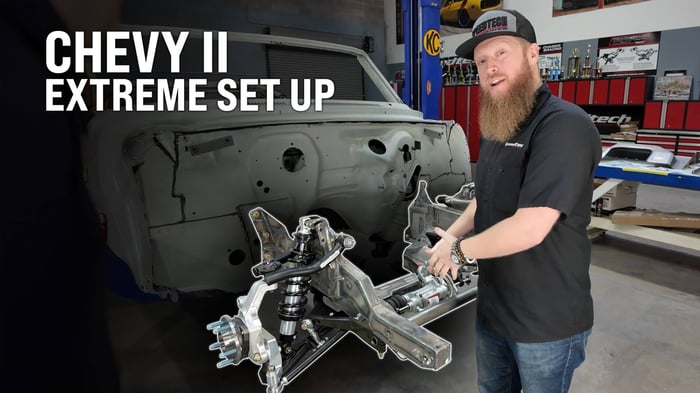
Chevy II ExtReme Subframe & Torque Arm System (1962–1967)
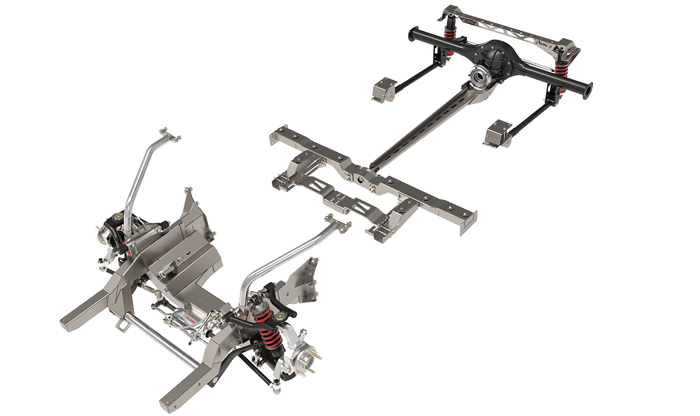
If you’re building a Chevy II, you already know these cars are small, lightweight, and packed with potential. From 1962 through 1967, the Chevy II platform earned a reputation as a simple, fun street car — but today’s builds often include big-blocks, LS and LT swaps, modern tire packages, and serious performance expectations. That’s exactly why our Chevy II ExtReme Subframe and Rear Torque Arm system was engineered to bring modern geometry, strength, and articulation to this classic chassis.
Modern Strength for the Classic Chevy II Front End
One of the first things you’ll notice about our Chevy II subframe is that it retains the factory firewall mounting plates. We intentionally designed the system to utilize the original mounting location, adding upper firewall attachment points for additional rigidity and strength.
Because the Chevy II was never originally designed to house large modern engines, some trimming of the factory mounting plate is required for header clearance — especially with LS or big-block combinations. This ensures proper fitment without compromising performance.
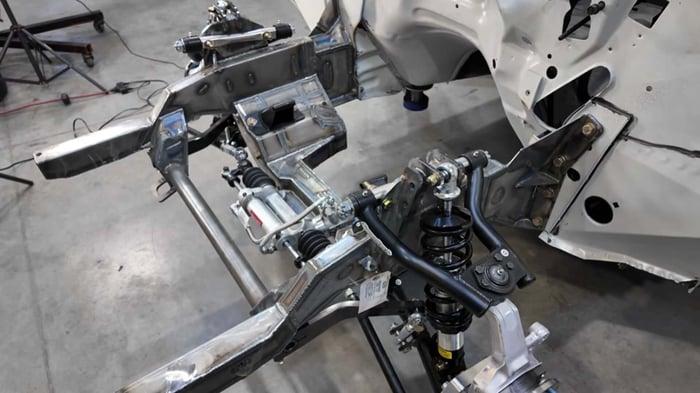
Key Front Subframe Features:
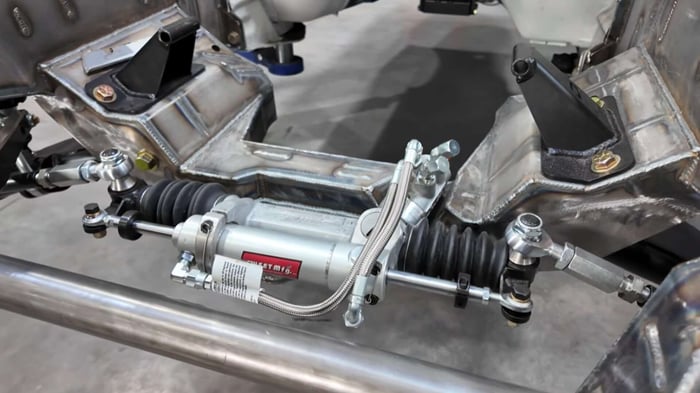
Sweet Manufacturing dual power rack-and-pinion system
Tubular upper and lower control arms
QA1 double-adjustable coilovers
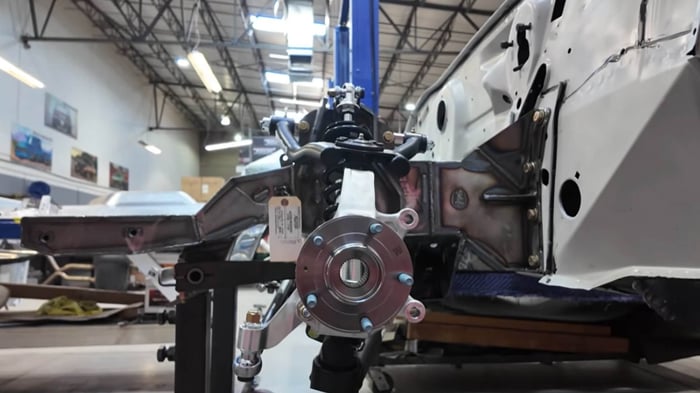
Forged aluminum spindle
C7 hub integration for modern braking capability
This setup mirrors the engineering found across our ExtReme chassis lineup, giving the Chevy II the steering precision and suspension geometry expected from a modern performance car.
Chevy II Rear Torque Arm Conversion
Moving to the rear of the Chevy II, the transformation continues.
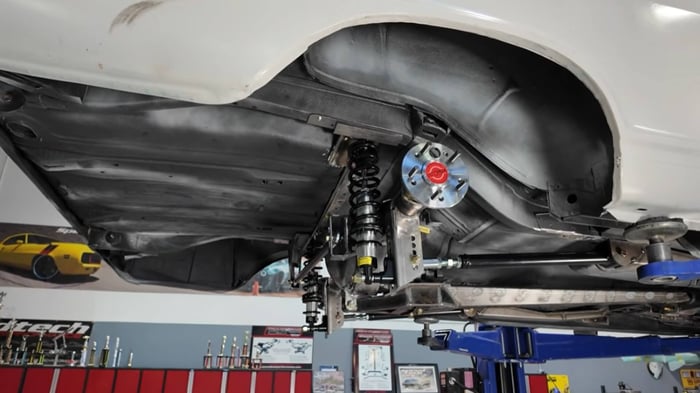
Our rear crossmember brackets are designed to match up directly with the factory frame rails. The vehicle shown in the install example is not mini-tubbed, which is important to note. When pairing with systems like mini tubs (for example, Detroit Speed setups capable of fitting a 295 rear tire), additional trimming may be required on both our bracket and the factory frame rail.
Required Modifications:
To properly install the Chevy II torque arm system:
Remove factory leaf spring pockets
Trim the factory bump stop tabs
Remove the factory parking brake bracket
Convertible models require trimming approximately 5 inches from the double rocker section
These modifications allow the brackets and crossmember to fit securely and correctly.
Floating Torque Arm = True Articulation
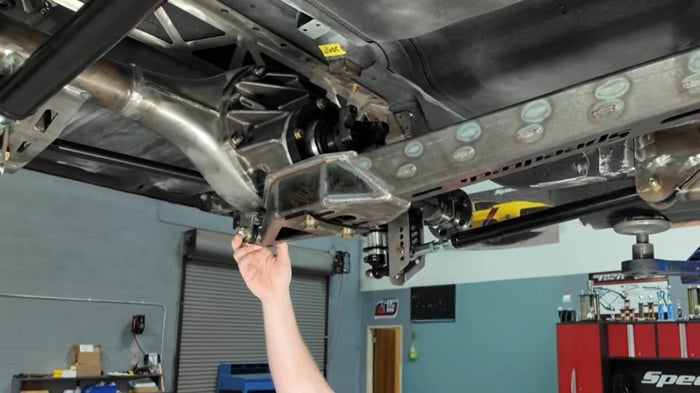
At the core of the system is our floating torque arm design, welded to the bottom of a 9-inch rear housing and extending forward to the front crossmember.
Because the torque arm works in conjunction with trailing arms, the system provides:
Full rear suspension articulation
Zero bind through travel
Improved traction under acceleration
Predictable handling in street or performance environments
For builders who prioritize handling, this is a massive upgrade over traditional leaf spring setups.
Longer Travel Coilovers for a Street-Friendly Chevy II
Handling is important — but so is ride quality.
When designing the Chevy II coilover conversion, we prioritized longer shock travel. That means:
Better street compliance
Improved ride comfort
More usable suspension travel
To achieve this, a section of the trunk floor must be notched to accommodate the top of the shock absorber. This modification allows the longer-travel coilover to function properly and deliver a more refined driving experience.
Reinforcement & Mounting
Our system includes:
Bolt-in sandwich plates (can also be welded)
Crossmember designed with spot-weld provisions
Optional welding points for added rigidity
Everything is engineered to integrate cleanly into the factory structure while dramatically improving performance.
Built for the 1962–1967 Chevy II Platform
Whether you're building a street-driven restomod, autocross machine, or vintage-inspired performance car, this Chevy II ExtReme Subframe and Torque Arm system modernizes the chassis without losing the character of the car.
By combining modern steering, forged spindles, floating torque arm geometry, and longer-travel coilovers, this setup transforms the early Chevy II into a car capable of handling today’s power and tire technology — confidently and comfortably.
If you're planning your Chevy II build and want to understand fitment, engine compatibility, tire sizing, or installation requirements, our Trusted Advisors are ready to help guide you through the process.

1962–1967 Chevy II ExtReme Subframe & Torque Arm – FAQ
1. What years does the ExtReme Subframe fit?
Our ExtReme Subframe is designed specifically for 1962–1967 Chevy II / Nova models. It is engineered to integrate with the factory firewall mounting points while adding additional reinforcement for modern performance demands.
2. Will this work on a convertible Chevy II?
Yes. Our system is fully compatible with convertible models. Because convertibles lack a fixed roof structure, the added chassis rigidity from the ExtReme Subframe significantly improves structural integrity and overall handling feel.
3. What engines will it support?
The ExtReme Subframe is designed to handle modern power levels including:
Small block Chevy
LS-based engines
LT-based engines
Big block applications (with proper setup)
The factory Chevy II was never designed for today’s horsepower levels — our system is.
4. Does installation require cutting or modification?
Some minor trimming of the factory mounting plates may be required for header clearance, especially with larger engines. This is typical when upgrading early Chevy II platforms to modern performance drivetrains.
5. What steering system does the subframe use?
The ExtReme Subframe utilizes a performance rack-and-pinion steering system designed to improve steering response, precision, and overall road feel compared to factory components.
6. What does the Torque Arm rear suspension improve?
Our Torque Arm system:
Reduces axle wrap
Improves traction under acceleration
Enhances cornering stability
Provides more predictable handling
It’s a major upgrade over factory leaf spring setups when building a pro touring or high-performance street car.
7. Is this a bolt-in system?
The front subframe uses factory mounting locations with added reinforcement points. The rear Torque Arm system requires proper installation and setup for optimal performance. Professional installation is recommended for best results.
8. Is this setup good for street driving or just track use?
Both. The geometry is engineered for real-world street driving while being fully capable of autocross, road course, and aggressive performance use. It dramatically improves ride quality, control, and driver confidence.
9. What makes the ExtReme Subframe different from other options?
Our system focuses on:
Modern suspension geometry
Improved chassis rigidity
Optimized weight distribution
Performance-driven engineering
It’s not just a replacement — it’s a complete rethinking of how a Chevy II should drive.