

First-Generation F-Body: A Buyer’s Guide to Building a Modern Pro Touring Camaro or Firebird
Table of Contents
- The Rise of Pro Touring
- The Foundation Changes Everything
- Starting Point: The Pro Touring Subframe
- Rear Suspension Matters: Why Torque Arm Beats Leaf Springs
- Taking It Further: The ExtReme Subframe
- Built for Competition: ExtReme XS
- Independent Rear Suspension: Modern Performance Meets Classic Muscle
- The Ultimate Foundation: Full Weld-In Chassis
- Choosing the Right Path for Your Build
- FAQs
Few vehicles define American performance like the first-generation Chevrolet Camaro and Pontiac Firebird. Built during the muscle car wars of the late 1960s, the F-body platform delivered bold styling, affordable V8 power, and the straight-line speed that defined an era before pro touring was born.
But while horsepower was abundant, the factory chassis technology showed its age when pushed beyond drag racing. Weak suspension geometry, flex-prone uni-body, leaf springs, and slow steering limited confidence in corners and under braking.
As motorsports evolved, racers proved these cars could do far more. From Trans-Am competition to autocross and road racing, enthusiasts began demanding sharper handling, better grip, and modern driving confidence.
That demand gave rise to the Pro Touring movement.
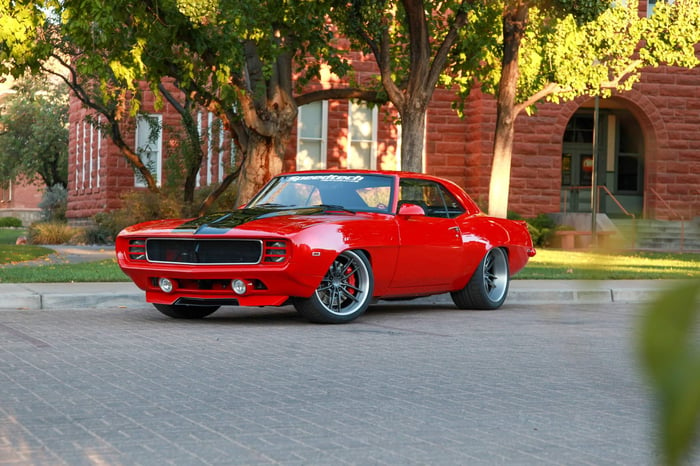 Extreme Subframe & IRS
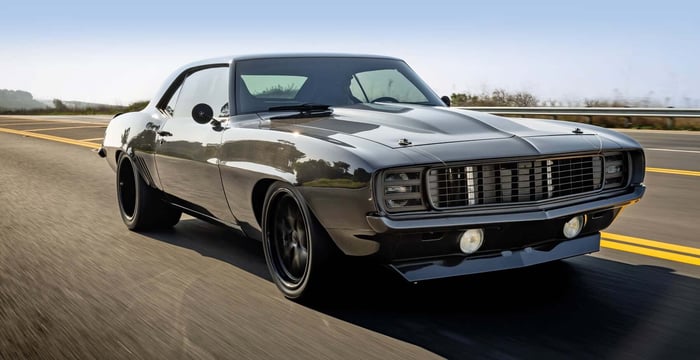 ExtReme Subframe & TARS
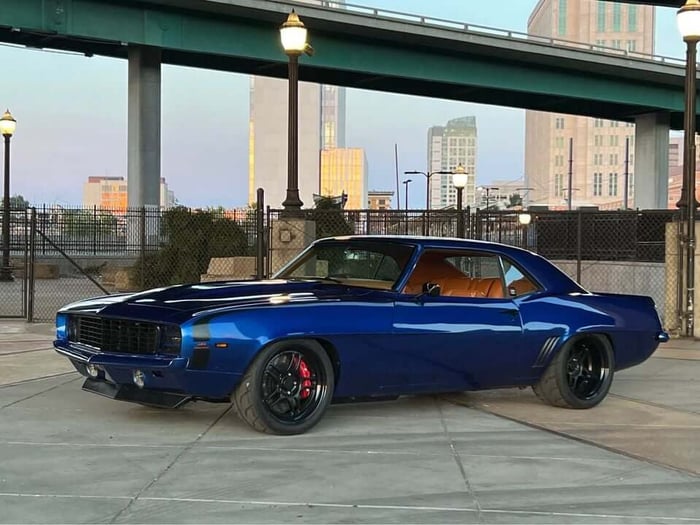 Pro Touring Subframe & TARS
The Rise of Pro Touring
Pro Touring transformed the classic muscle car world. Instead of simply restoring vintage cars to factory specifications, builders began integrating modern suspension geometry, performance brakes, wide tires, rack-and-pinion steering, and chassis reinforcements into classic platforms.
The goal wasn’t to erase the identity of the muscle car - it was to unlock its full potential.
Today’s Pro Touring builds are expected to accelerate hard, carve corners, remain stable at speed, and deliver comfort on long drives. That level of performance starts with one critical element:
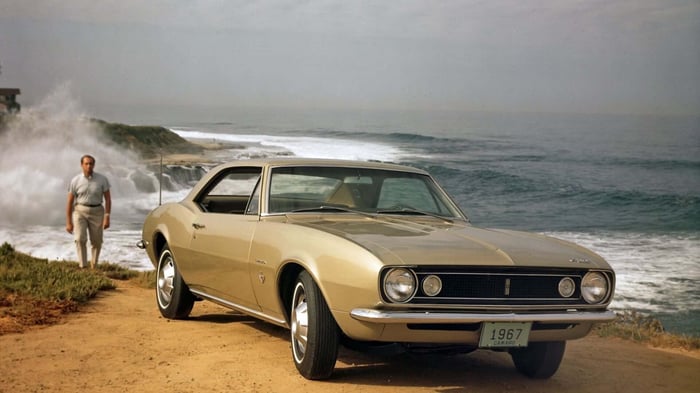 Debut of the 1967 Camaro
The Foundation Changes Everything
Horsepower is easy to add. Real performance comes from the chassis underneath the car.
The suspension geometry, structural rigidity, steering precision, and rear suspension design determine how effectively a classic Camaro or Firebird can put power to the ground. That’s why modern Pro Touring builds focus first on upgrading the foundation before adding more horsepower.
Once you have decided to take the leap from a street car to a more serious performance-based car, Speedtech Performance has built its reputation around this philosophy - engineering suspension and chassis systems that modernize the F-body platform while maintaining the soul of the original car. Their systems are designed around real-world track experience, modern geometry, and integrated engineering solutions for street and competition use.
For enthusiasts building a first-generation Camaro or Firebird, the journey typically starts with the front subframe.
Starting Point: The Pro Touring Subframe
For many builders, the Pro Touring Subframe is the ideal entry point into modern handling performance.
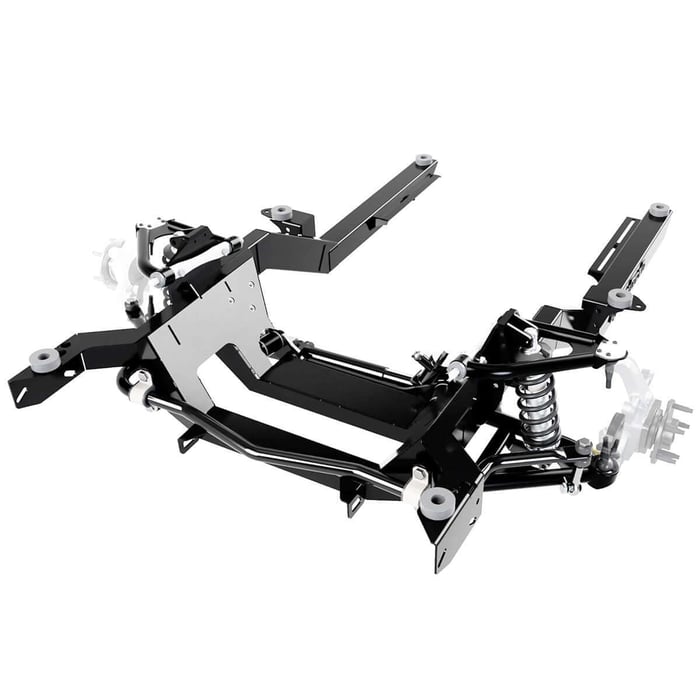 F-Body Pro Touring Subframe - Speedtech Performance
The factory front subframe on early F-bodies was never designed for modern tire widths, aggressive cornering loads, or contemporary steering feel. Speedtech’s Pro Touring Subframe addresses those weaknesses with a rigid boxed design that improves strength, stability, and overall handling confidence.
One of the most noticeable improvements comes from the modern power rack-and-pinion steering system, which dramatically sharpens steering response while improving road feel and low-speed maneuverability compared to the original steering setup.
Geometry improvements also allow significantly larger front tire fitment, up to a 275-wide tire, helping the car generate substantially more front-end grip without clearance issues.
For street-driven Pro Touring builds, this subframe delivers a major leap in confidence and responsiveness while maintaining a straightforward upgrade path.
Pro Touring Subframe & Torque Arm Restomod CamaroRear Suspension Matters: Why Torque Arm Beats Leaf Springs
Once front suspension performance improves, the limitations of the factory rear suspension become increasingly obvious.
The original leaf spring setup was durable and simple, but it struggles with axle control, traction consistency, articulation, and ride quality under aggressive driving. Many aftermarket builders moved toward traditional 4-link systems, but those designs often require invasive chassis modifications and can introduce suspension bind if not properly engineered.
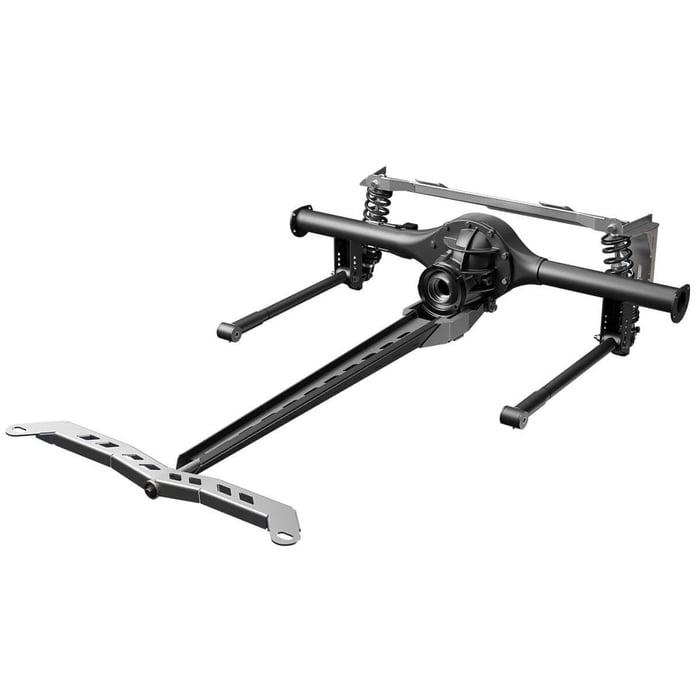 F-Body Torque Arm Suspension System - Speedtech Performance
That’s where the Torque Arm rear suspension stands apart.
Speedtech’s Torque Arm system transfers acceleration and braking loads into the center of the chassis, improving traction during launches while increasing stability under braking.
Unlike many aggressive 4-link systems, the Torque Arm design maintains bind-free articulation for improved ride quality and more predictable handling characteristics. It’s also less intrusive to install, often allowing builders to retain the rear seat, a major advantage for street-oriented Pro Touring cars.
When it comes to rear suspension upgrades, one of the biggest goals is fitting wider tires for improved grip and performance. With the help of Detroit Speed mini-tubs, running tires as wide as 335s becomes an easy and clean solution for modern Pro Touring builds.
Additional advantages include:
- Coiloverconversion capability for better ride tuning and clearance
- Adjustable rear roll center tuning for balancing grip and handling characteristics
- Compatibility with Ford 9-inch, factory 10-bolt, or 12-bolt rearends
For many enthusiasts, the combination of a Pro Touring front subframe and Torque Arm rear suspension creates the perfect street-and-track foundation.
Taking It Further: The ExtReme Subframe
For builders who demand significantly higher cornering performance, steering precision, and tire capability, the Speedtech ExtReme Subframe moves into an entirely different category.
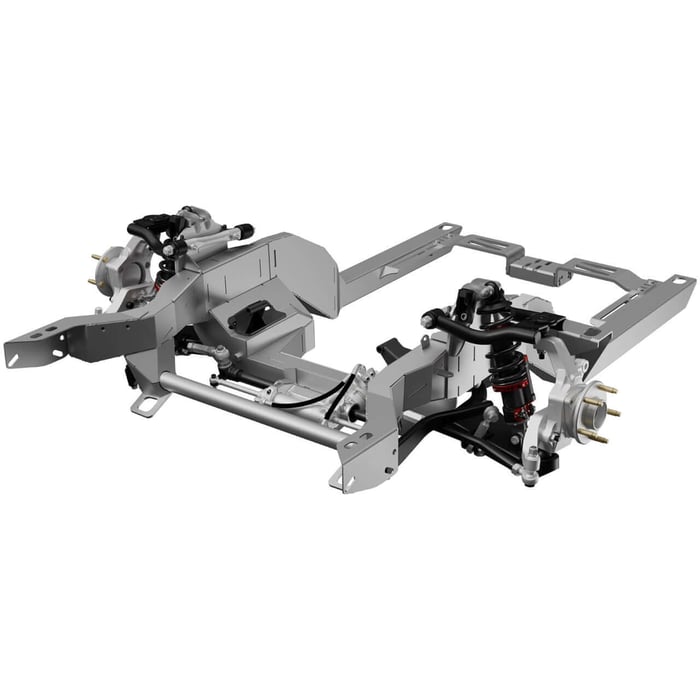 ExtReme Subframe F-Body - Speedtech Performance
This system is engineered around modern suspension geometry and race-inspired steering performance. The subframe incorporates a high-performance dual power rack-and-pinion steering setup from Sweet Manufacturing, billet steering arms, and 7075 forged aluminum spindles for dramatically improved steering precision and feedback.
The geometry is optimized to deliver up to approximately 30 degrees of steering angle while maintaining confident handling characteristics and tight maneuverability.
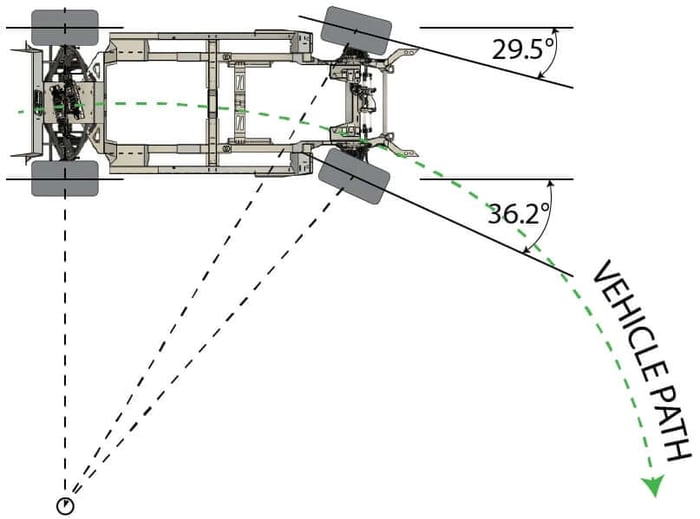
Perhaps most importantly, the ExtReme Subframe was engineered around modern tire fitment. The system allows up to 315 mm front tires while maintaining full steering sweep, a massive increase in front-end grip capability over factory architecture.
This is where the philosophy of modern Pro Touring becomes clear: more grip, better geometry, improved steering precision, and increased chassis confidence.
ExtReme Subframe & Torque Arm Suspension System EquippedThe result is a first-generation Camaro or Firebird that behaves far more like a contemporary performance car than a vintage muscle machine.
Built for Competition: ExtReme XS
For builders focused on autocross, track competition, and maximum performance capability, Speedtech developed the ExtReme-XS Subframe.
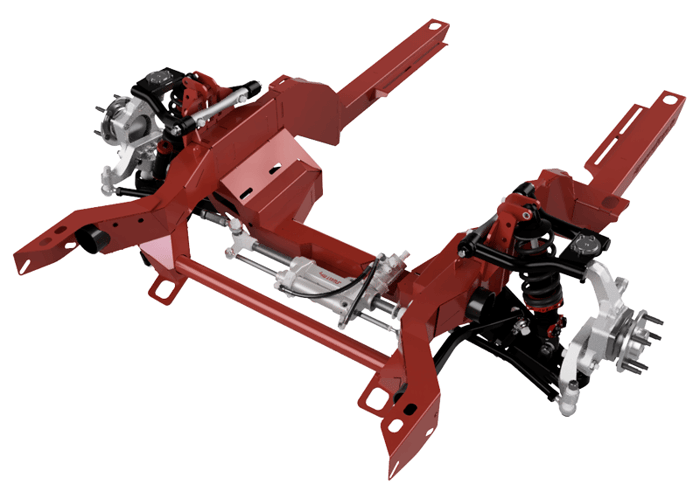 F-Body ExtReme - XS Subframe - Speedtech Performance
The XS package is purpose-built for serious drivers who prioritize lap times and competitive performance. According to Speedtech, the system maintains full chassis rigidity and optimized suspension geometry while maximizing track performance potential.
The ExtReme-XS introduces integrated brake ducting that routes cooling air directly to the brakes during high-load track sessions, helping manage temperatures during aggressive driving.
It also incorporates Stren-X weight-saving construction technology, reducing overall weight to improve acceleration, braking, and handling response.
 ExtReme - XS Subframe with Independent Rear Suspension - Speedtech Performance
For dedicated track-focused builds, the XS system represents the upper limit of front suspension capability within the factory-based platform.
Independent Rear Suspension: Modern Performance Meets Classic Muscle
As performance expectations continue to rise, many builders are moving beyond traditional solid rear axles entirely.
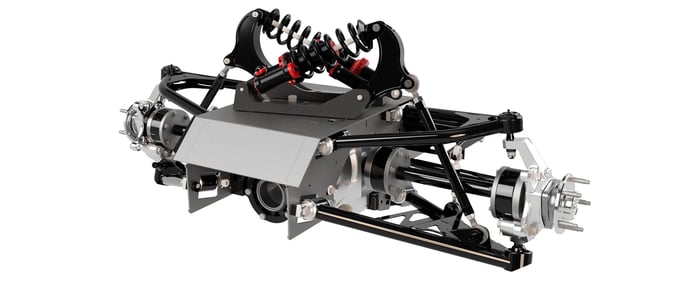
Speedtech’s Independent Rear Suspension system transforms the driving dynamics of a classic F-body by dramatically improving rear-end compliance, traction, and balance.
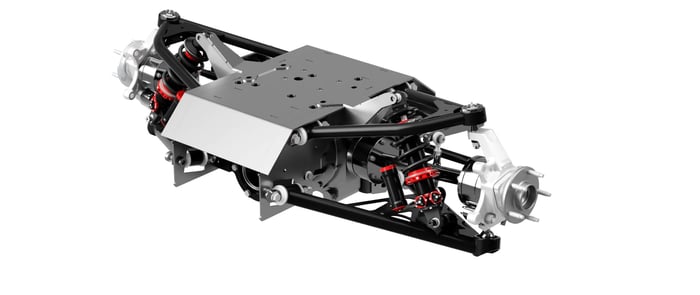 Traditional Mount IRSHigh Mount - Cantilever IRS
Unlike a solid axle, an IRS allows each rear wheel to react independently to changing road conditions. The result is improved cornering stability, better ride quality, and more predictable handling at the limit.
The Speedtech IRS system includes several key engineering advantages:
- Fully adjustable rear geometry including camber, toe, and roll center tuning
- Flexible direct-mount or cantilevercoilovermounting options
- Lightweight forged aluminum components to reduceunsprungweight
- High-strength CV half-shafts designed for modern horsepower levels
- High-efficiency shock motion ratios for improved ride control and traction without excessive spring rates
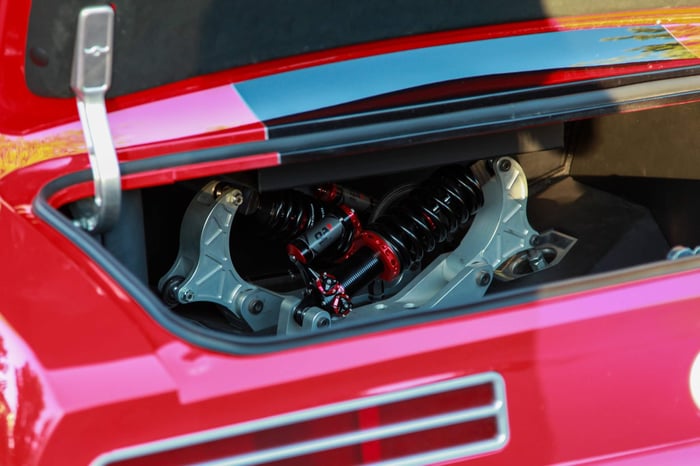 IRS view inside Trunk
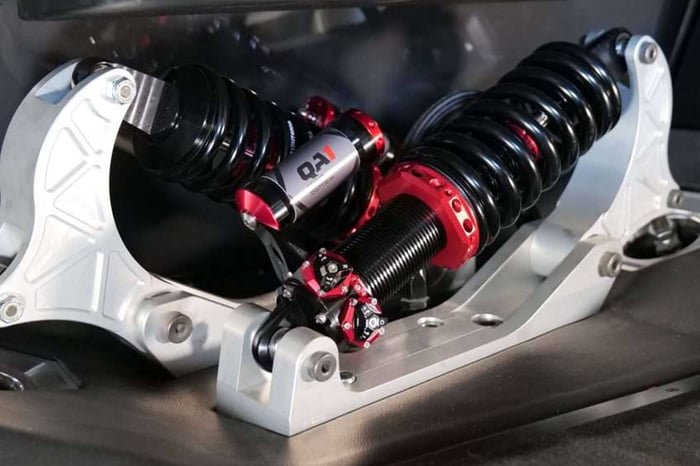 Overhead Cantilever Set Up
For builders seeking modern supercar-style balance and refinement within a classic platform, IRS represents the next evolution of Pro Touring performance.
The Ultimate Foundation: Full Weld-In Chassis
At the top of the lineup sits the full weld-in chassis system - the ultimate expression of modernized F-body performance.
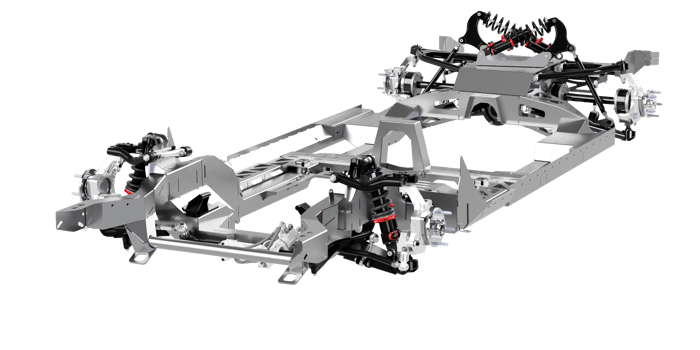 F-Body Full ExtReme IRS Chassis - Speedtech Performance
Rather than simply upgrading factory architecture, the Speedtech chassis replaces the original structure with a fully engineered welded platform designed around modern suspension geometry, structural rigidity, and integrated performance systems.
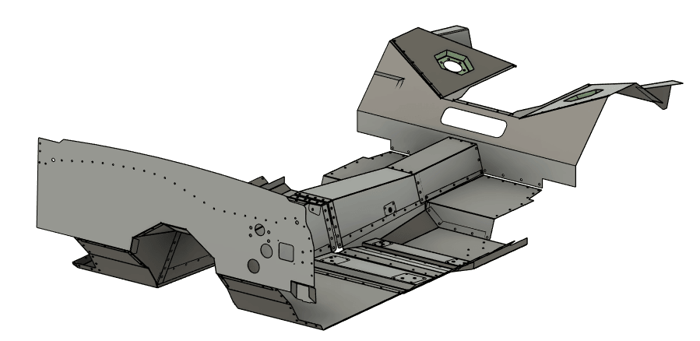 Firewall, Tunnel, Floor & IRS Sheet Metal Kit for F-Body Full Frame
The chassis dramatically increases torsional stiffness while reducing chassis flex, creating a far more stable platform for high-performance driving.
Additional advantages include:
- Will accept either the Pro Touring, ExtReme or ExtReme-XS subframe
- Modern suspension geometry for improved tire contact and minimized bump steer
- Precision dual-power rack-and-pinion steering compatibility with modern brake systems and C7 hubs
- Integrated sheet metal solutions including larger transmission tunnels and IRS enclosures
- Massive wheel and tire capability, including up to 315 front tires and 355 rear tires with proper tubs
- Fully integrated IRS capability for ultimate balance and performance
One of the biggest advantages of the weld-in chassis is that it creates a true foundation for every other system in the car. Suspension, steering, braking, drivetrain, and tire performance all improve because the platform itself is engineered to handle modern loads and grip levels.
For builders pursuing the ultimate Pro Touring Camaro or Firebird, this is the ultimate foundation.
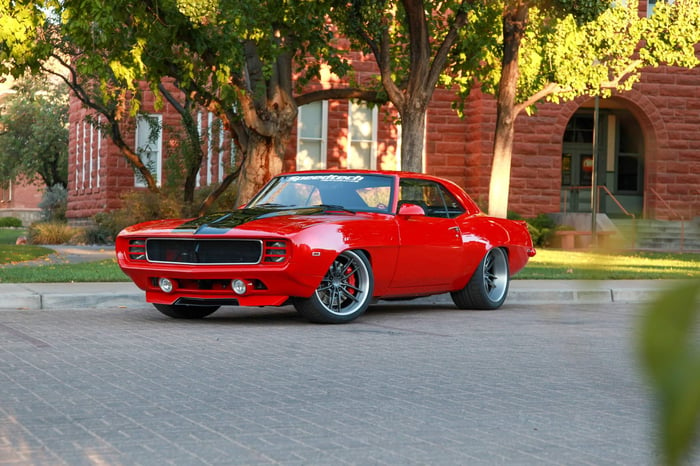 RedZed - Equipped with ExtReme Subframe and IRS suspension Set up
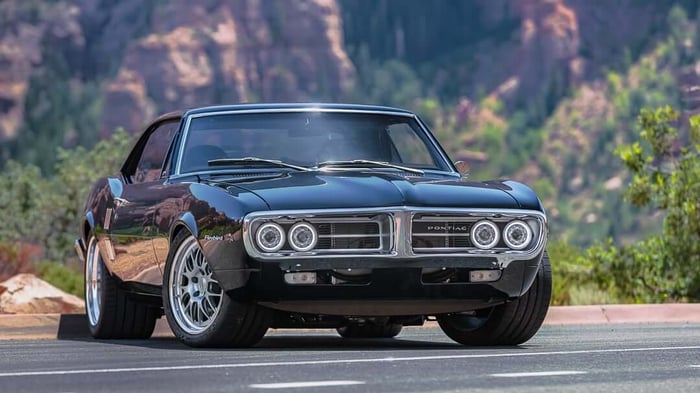 67 Firebird equipped with ExtReme Subframe & Torque Arm Suspension System
Choosing the Right Path for Your Build
Every enthusiast has different goals for their F-body build.
Some want a comfortable street car with improved handling and modern steering feel. Others want a canyon-carving Pro Touring machine capable of track days and autocross competition. Some builders want the ultimate expression of modern chassis engineering hidden beneath classic sheet metal.
The soul of the first-generation Camaro and Firebird remains unchanged. What has changed is the technology underneath them. And today, thanks to modern engineering, these legendary muscle cars can finally perform as aggressively as they always looked.
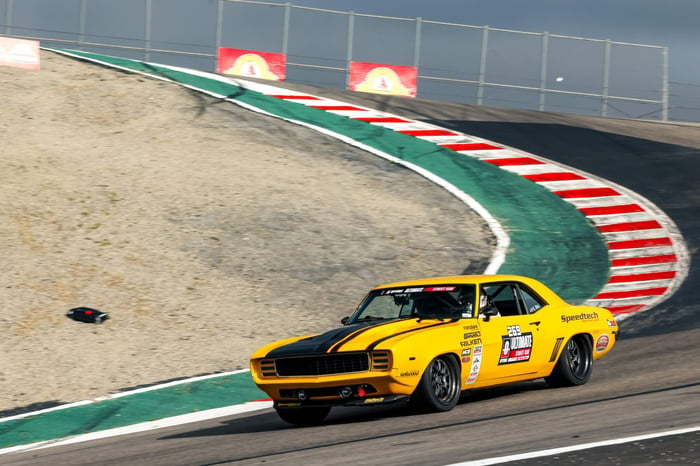
Speedtech Performance’s engineering philosophy isn’t just proven on paper, it’s validated through real-world competition success. Over the years, Speedtech-equipped vehicles have consistently earned podium finishes in some of the most demanding Pro Touring, autocross, and road course events in the country. From national-level competition to grassroots motorsports, these cars have demonstrated the balance of grip, predictability, durability, and driver confidence that modern enthusiasts demand. That racing success directly influences product development, allowing Speedtech to refine suspension geometry, chassis rigidity, steering response, and overall vehicle dynamics through actual track testing rather than theoretical design alone. The result is a lineup of components engineered not just to look impressive in the garage, but to perform at the highest level when pushed to the limit.