Built to Survive: Tony Phillips’ 140 MPH Crash in His ’55 Bel Air
Tony Phillips’ 140 MPH Crash in His ’55 Bel Air
When Team Speedtech member Tony Phillips lined up at Portland International Raceway in the summer of 2024, he had no idea his next lap would end in a fiery wreck. Driving his black and silver 1955 Bel Air equipped with a supercharged LS engine, Tony was pushing 140 mph down the backstretch when everything went sideways — literally.
“Just about to grab fifth gear, the back end of the car got light and started to come around,” Tony recalled. “I chased it down the track but didn’t catch it. Went straight into the wall.”
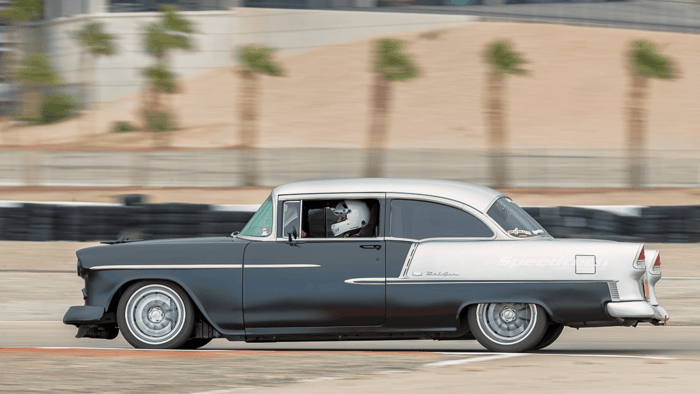
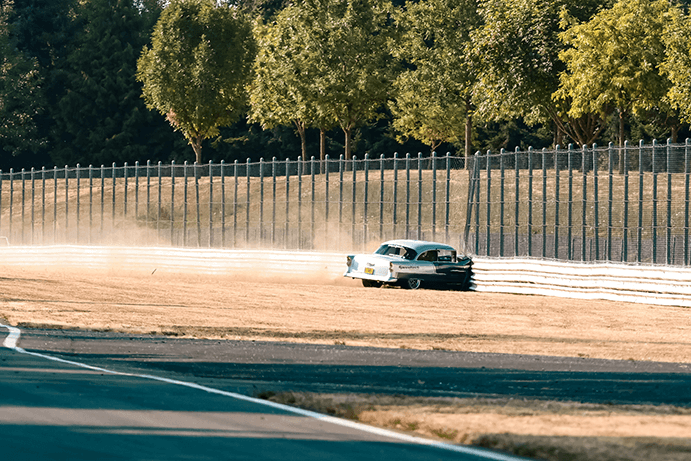
What followed was a harrowing series of events: a loss of brakes, locked steering, and ultimately, a catastrophic crash that sent Tony’s car careening back across the track.
“The steering wheel locked up. The brake pedal went to the floor — the line had been severed. I was just along for the ride at that point.”
From behind, Tony’s son Kyle — the next car on track — didn’t initially realize what had happened.
“There’s a slight bend in the backstretch, and my dad had just disappeared out of view. Then I saw this big dust cloud. At first, I thought maybe someone just touched a couple wheels off.”
It wasn’t until he saw the car sliding across the grass — with the door open — that he realized the severity.
“I got closer and thought, ‘Holy—he hit the wall. He crashed.’ Then I saw steam coming from under the hood, and that’s when panic set in.”
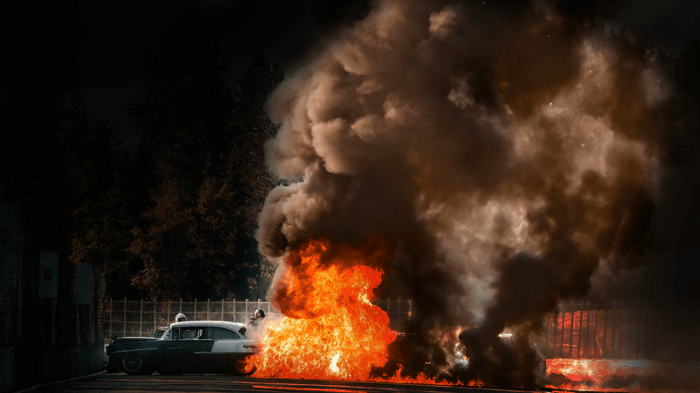
And then like that – the back of the car catches fire!
As Kyle ran toward the burning car with a fire extinguisher, Tony was still strapped in, unaware the back of the car was engulfed in flames.
“I looked back through the open passenger door and saw my son flailing his arms trying to get me out. That chokes me up even now.”
Though the fire was too large for either extinguisher to contain, Tony escaped with only bruising on his shoulders — a result of the belts doing their job. But the real reason he walked away, he says, lies in what was beneath him: a Speedtech Performance chassis.
“I bent the bolsters of my Corbeau seat from the impact, but the chassis held. That’s the difference. If this had been a factory ’55 frame, we wouldn’t be having this conversation.”
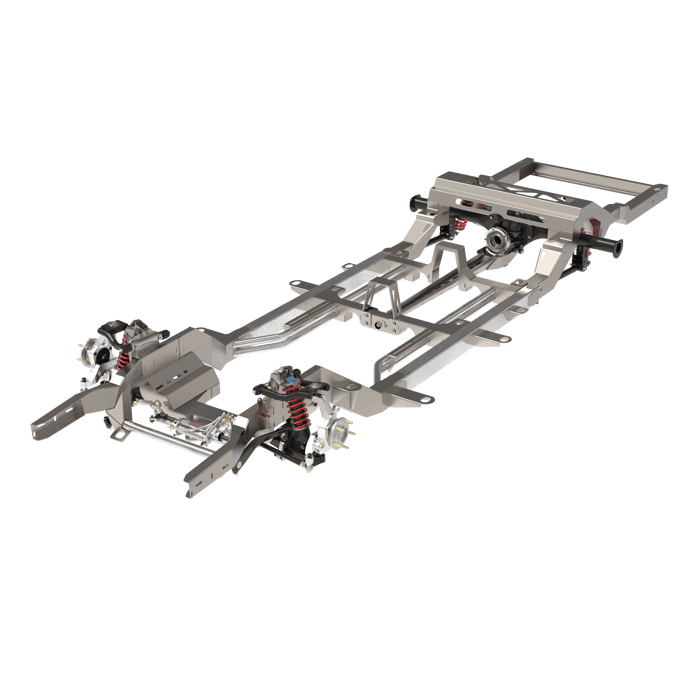 Modern Chassis provides enhanced safety
Kyle emphasized that the stock 1955–1957 GM chassis were designed to flex for comfort, not performance or crash safety.
“They were built to twist over bumps to give a better ride — not to survive crashes. That frame would’ve folded right into the firewall. The engine and tire would’ve come into the cabin.”
Instead, Speedtech’s chassis — with its internal gusseting and plating — absorbed and redirected the energy.
“The front end was pushed over and up, engine mounts bent, headers collapsed, but nothing got into the firewall. The rear end was pushed over about an inch and a half, but it held. The car did what it was supposed to do.”
Tony credits the combination of his safety gear and the Speedtech chassis with his survival.
“Everything worked. The chassis kept the engine out of the cabin. The belts held me in. I was able to run away from that fire. I can’t say enough about building a strong car.”
At Speedtech Performance, building chassis for both the street and the track isn’t just about performance — it’s about protection when it matters most.